
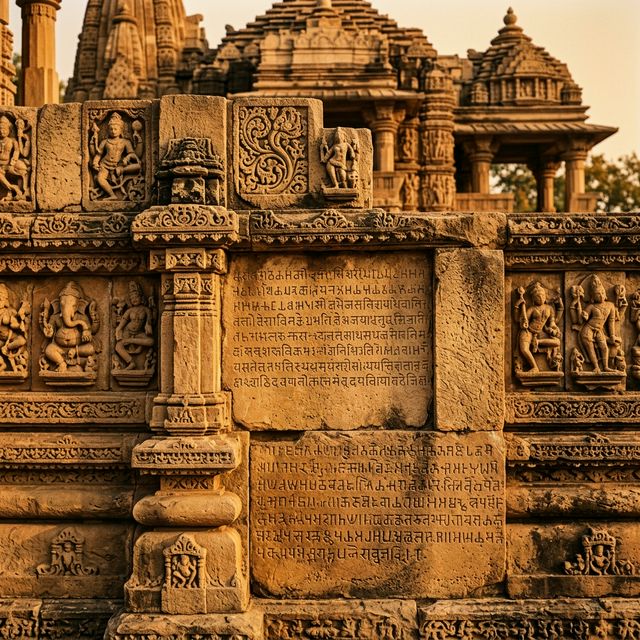
Discovered near Vasai in Maharashtra, this stone inscription dates to the Śaka 1072 (1150 CE) during the reign of the Śilāhāra king Haripāladeva. The stele features a maṅgala-kalaśa flanked by the sun and the moon, while the bottom panel incorporates the ass-curse depiction. The record is engraved in the Nāgarī script, while the language, being mainly Sanskrit, shows influences of Marathi.
Mahāpradhāna Āhavamalladeva, who held the village of Vaṭṭāra within the famous Śūrpāraka (modern Nalasopara) division, donated the revenue of the hamlet Ānevāḍī to a brāhmaṇa named Brahmadevabhaṭṭa Upādhyāya. This endowment, formalised by the ritual pouring of water, was executed on the auspicious occasion of the Uttarāyaṇa saṅkrānti.
1. siddham | svasti | jayaścābhyudayaśca | śakanṛpakālātītasaṃvatsaraśateṣu daśasu
2. dvisaptatyadhikeṣu yatrāṅkatopi saṃvat 1072 pramodasaṃvatsarā
3. ntarggata mārggaśīrṣasudha 1 pūrvasyāṃ tithau adyeha samadhigatā śeṣapañcamahāśabda-
4. śrīśilāhāranarendrajīmūtavāhanānvayaprasūtasamastarājāva-
5. līsamalaṅkṛtamahāmaṇḍaleśvarādhipatiśrīmad-haripāladeva-
6. kalyāṇavijayarājye | tatprasādāvāptasamastamaṇḍalacintābhā-
7. raṃ samudvahati śrīvesupaḍavala | tathā mahāpradhānaśrīlakṣmaṇa-
8. prabhu | tathā mahāpradhānaśrīpadmaśiva rāula | tathā pradhānavāsu-
9. gināyaka | satyetasmin kāle pravarttamāne | śrīśūrppārakānta-
10. rggata vaṭṭāragrāma prabhuñjānena mahāpradhānaśrī-āhavamalladevena
11. śrīgovarddhanabhaṭṭa upādhyāya sutadivākarabhaṭṭa upādhyāyasutabrahmadeva-
12. bhaṭṭa upādhyāya mahāparvvaṇi uttarāyaṇasaṅkrāntisamaye dharmmeṇa udakapū-
13. rvvakaḥ paṭakīlarājānaka ānevāḍīsiddhāyaḥ pradattaḥ | ācandrārka-
14. tārakaṃ yāvat tiṣṭhati medinī kenāpi paścādbādhā na karaṇīyā |
15. atrārthe sākṣī vaṭṭāragrāmapramukharisi mhatārā | tathā sākṣī nāguji mha-
16. tārā | tathā sākṣī anantanāyaka | sākṣī cāṅgadeva mhatarā sākṣī… … kesavo… … …
Success! Hail! May there be victory and prosperity!
In the expired year ten hundred increased by seventy—in figures 1070—by the era of the Śaka king, during the victorious reign of the mahāmaṇḍaleśvarādhipati, the illustrious Haripāladeva, an orchard at Rānjalī in the western part of the seashore, which is situated in Śūrpāraka—two thousand, has been granted by a royal charter with the approval of all people headed by the illustrious Devalanāyaka. Viṣṇu Upādhyāya, who has emigrated from Māhara and is now staying at the town of Śūrpāraka is the religious owner of the orchard at Rānjalī. The illustrious… … is the witness.
For his maintenance 10 drammas were donated by Cāṭasa Visaladeva in the Śaka year 1059, the cyclic year being Prapiṅgala.
| Dynasty: | Śilāhāra |
| Ruler: | Haripāladeva |
| Date: | 22nd November 1150 CE (Mārgaśīrṣa śuddha 1, Śaka 1072) |
| Place: | Vaṭṭāra, included in Śūrpāraka (Sopara region) |
| Donee: | Brāhmadeva Bhaṭṭa Upādhyāya |
| Language: | Sanskrit influenced by Marathi |
| Nature of grant: | Religious endowment |
| Purpose: | To record the religious endowment made on Uttarāyaṇa-saṅkrānti for spiritual merit |
| Provenance of inscription: | Agashi, Maharashtra |
| Type of Inscription: | Stone inscription, Gadhegal or Ass curse Inscription |
| Source: |
Bibliography & Research
- Altekar, A. S. (1936). The Śilāhāras of Western India. In: Bhandakar (Ed.). Indian Culture, 2, pp 393-434, here pp 415.
- Mirashi, V. V. (Ed.). (1977). Corpus Inscriptionum Indicarum, Vol. VI: Inscriptions of the Śilāhāras. Archaeological Survey of India, pp xvii-xviii and 144-146, 279-280.
- Sankalia, H. D., & Upadhyaya, S. C. (1935–1936). Six Śilāhāra inscriptions of the Prince of Wales Museum. Epigraphia Indica, 23, 269-281, here 273 and 274.
