
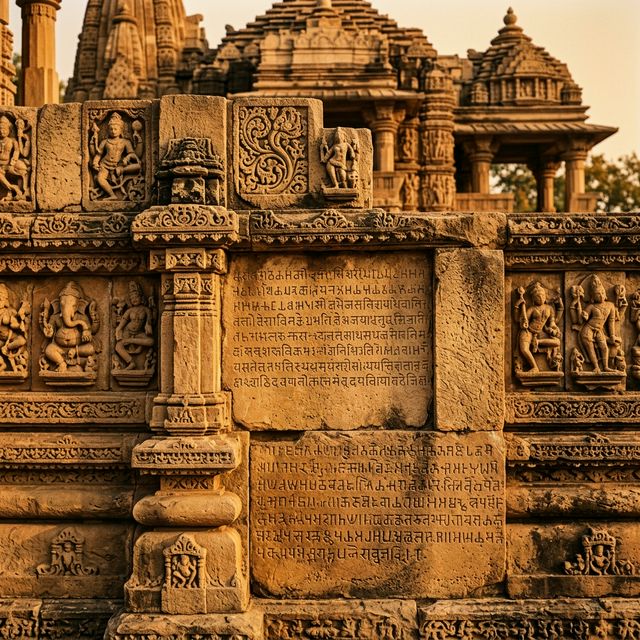
The Nasik cave inscription of the Ābhīra king Īśvarasena is a significant epigraphic record incised on the left wall of cave 10 on the Triraśmi hill near Nasik, Maharashtra. This inscription is in Sanskrit language with discernible Prakrit language influences, while the script is Brāhmī. First brought to scholarly attention in 1864, the record was subsequently edited by prominent epigraphists including R. G. Bhandarkar, Buhler, and Senart, the latter providing the current standard edition.
The inscription records a perpetual endowment established by Viṣnudattā, a śaka lay devotee and daughter of śaka Agnivarman, during the ninth regnal year of Īśvarasena. To provide medicines for sick Buddhist monks residing in the Triraśmi monastery, she invested several sums of kārṣapaṇas with various professional guilds in Govardhana. These included investments of one thousand kārṣapaṇas with the guild of potters (kularikas), two thousand kārṣapaṇas with the manufacturers of hydraulic machines (odayantrikas), five hundred kārṣapaṇas with an unidentified guild, and an unspecified amount with the guild of oil-millers (tilapiśakas). This record is dated to the thirteenth day of the fourth fortnight of the summer season which corresponds to 258-259 CE.
1. siddham | rājñaḥ māḍharīputrasya śivadattābhīraputrasya
2. ābhīrasyeśvarasenasya samvatsare navame 9 gi-
3. mhapakhe cothe 4 divasa trayodaśa 10 3 eta-
4. yā purvayā śakāgnivarmmaṇaḥ duhitrā gaṇapakasya
5. rebhilasya bhāryayā gaṇapakasya viśvavarmasya mā-
6. trā śakanikayā upāsikayā viṣṇudatta yā sarvasattva hi –
7. ta sukhārtham triraśmiparvatavihāravāstavyasya cāturdiśasya
8 . bhikṣusamghasya gilānabheṣajārthamakṣayanīvī prayuktā ...va….vāsta-
9. vyāsu āgatānāgatāsu śreṇiṣu yataḥ kularikaśreṇyā haste kārṣāpaṇa –
10. sahasram 1000 odayamtrikaśreṇyām sahasrāṇi dve 2 ………….
11. ṇyām śatāni pamca 500 tilapiṣakaśreṇyām ……………….
12. ete ca kārṣāpaṇā catālopi …………………………………..
13. ……………tasya māsavṛddhito ……………………………………….
Lines 1 to 11
Success! In the ninth (9) year of the king, the Ābhīra Īśvarasenā, son of the Ābhīra Śivadatta and son of Māḍharī, on the thirteenth (10 and 3) day in the fourth (4) fortnight of summer, on this aforementioned day, the lay devotee Viṣṇudattā of the śaka race, mother of the accountant (gaṇapaka) Viśvavarman, wife of the accountant (gaṇapaka) Rebhila, and daughter of the śaka Agnivarman, has invested the following perpetual endowment in the present and future guilds dwelling at Govardhana. This is in order to provide medicines for the sick among the community of monks from the four quarters dwelling in this monastery on mount Triraśmi, for the well-being and happiness of all creatures, viz, one thousand (1000) kārṣāpaṇas in the hands of the guild of potters (kularikas), two thousand (2000) kārṣāpaṇas in the guild of the manufacturers of hydraulic machines, five hundred (500) in the guild of …………………………. in the guild of oil-millers.
Lines 12 and 13
All these four investments of kārṣāpaṇas…………….by the monthly interest of ………………………...
| Dynasty: | Ābhīra |
| Ruler: | Īśvarasena |
| Date: | c. 258-259 CE (Grīṣma-pakṣa 4, divasa 13, Regnal Year 9) |
| Place: | Trirashmi (Pandav leni or Nashik) cave 10, Nashik, Maharashtra |
| Donor: | Viṣṇudattā |
| Donee: | Āryasaṅgha at Trirashmi (Pandav leni or Nashik) cave |
| Language: | Sanskrit mixed with Prakrit |
| Script: | Brāhmī |
| Religion: | Buddhist |
| Nature of grant: | Religious endownment |
| Purpose: | To provide medicines for sick Buddhist monks residing in the monastery |
| Provenance of inscription: | Trirashmi (Pandav leni or Nashik) cave 10, Nashik, Maharashtra |
| Type of Inscription: | Stone Inscription |
| Source: |
Bibliography & Research
- Bhandarkar, R. G. (1876). The Nasik Cave Inscriptions. Transactions of the International Congress of the Orientalists, II, 306-354.
- Burgess, J., & Indraji, B. (1880). Chapter VII: Nashik Caves. In The Cave Temples of India. Archaeological Survey of India. Campbell, J. (1883). Gazetteer Bombay Presidency Nasik. Government Central Press, Bombay.
- Mirashi, V. V. (Ed.). (1955). Corpus Inscriptionum Indicarum Inscriptions of the Kalachuri Chedi Era. In (Vol. Vol 4 (Part 1), xxxi-xxxv and 1-4. Archaeological Survey of India.
- Senart, E. (1905-1906). No. 8. The Inscriptions in the Caves at Nashik (D. R. Bhandarkar, Ed.). Epigraphia Indica, 8, 88-89.
- West, E. W., & West, A. A. (1862). Naśik Cave Inscriptions with a plan. Journal of the Bombay Branch of the Royal Asiatic Society, VI-VII, 37-52.
This inscription provides specific evidence of the banking functions of ancient Indian guilds (śrenis) and donations being provided as investments to these guilds that had a feature of monthly returns.