
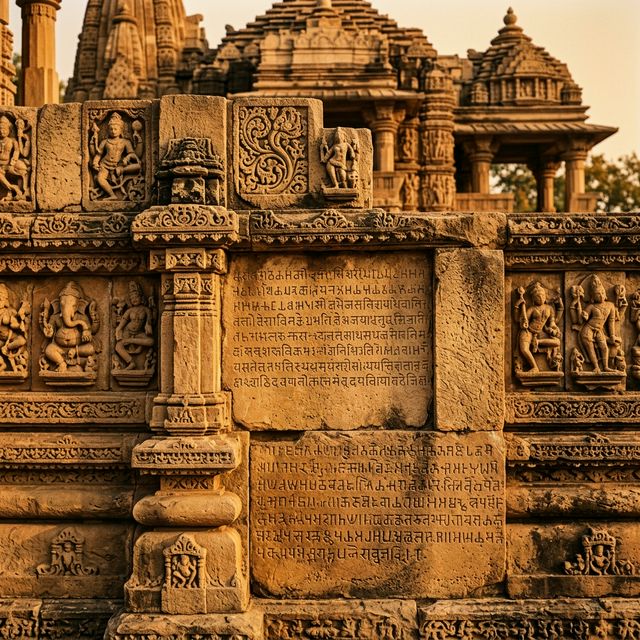
The Indore copper-plate inscription of mahārāja Svāmidāsa, incised in Brāhmī characters, is an administrative record dated to year 67 of the Kalacuri era. Issued from the royal capital Valkha, probably modern Vaghli in Khandesh (north-western Maharashtra), the single plate contains nine lines of Sanskrit. The record can be dated to the fifth day of the bright fortnight of Jyeṣṭha, year 67 which corresponds to 2nd May 317 CE.
Issued from Valkha, mahārāja Svāmidāsa, acknowledging his unnamed paramount sovereign, directs an edict to his officers. The charter formally confirms the royal assent to a brahmadeya land grant for the brāhmaṇa Muṇḍa of the Śāṇḍilya gotra. The donated property, a field previously associated with the merchant Ārya, is located in dakṣiṇa Valmika-tallavāṭaka within the Nagarika division (pathaka). The record decrees the land is granted in perpetuity, to be cultivated by the donee and his lineage as long as the celestial bodies endure, mandating all royal associates to respect this grant. Nannabhaṭṭi served as the dutaka for the decree.
1. valkhāt paramabhaṭṭārakapādānuddhyāto mahārājaśrīsvāmidāsaḥ sāmājñā–
2. payati sarvvānevāsmatsvasantakānāyuktakānvijñātamastu vaḥ samanujā-
3. nīmo.asya śāṇḍilyasagotramuṇḍabrāhmaṇasya nagarikāpathake dakṣiṇava–
4. lmikatallavāṭake āryyavāṇi jakapratyayakṣetrapadam brahmadeyamācandrār–
5. katārakakālīyam putrapautrānvayabhogyam bhogāya evamidānī masyāsmā-
6. bhiḥ kṛtānujñasyocitayā brahmadeyabhuktyā bhuñjataḥ kṛṣataḥ karṣa-
7. yataśca sarvverevāsmatpakṣatatkulyādibhissamanumantavyam |
8. nannabhaṭṭirdūtakaḥ | varṣe 60 7 jyeṣṭha śu 5 |
9. (In the margin) mahārājaśrīsvāmidāsasya |
Lines 1 to 4
From Valkha, the mahārāja, the illustrious Svāmidāsa, who meditates on the feet of the Great Lord (paramabhaṭṭāraka), issues the following order to all our officers:
Be it known to you that we hereby give our assent to the brahmadeya gift of a field, belonging to the merchant Ārya and situated in the southern Valmika-tallavāṭaka in the pathaka of Nagarikā, to the brāhmaṇa Muṇḍa of the Śāṇḍilya gotra. This is to be enjoyed by him and by a succession of his sons and sons’ sons as long as the moon, the sun, and the stars endure.
Lines 5 to 7
Wherefore, all persons connected with us, those born in their families, and others should consent to this grant, since he has now been permitted by us, he may do so as long as he enjoys the field, cultivates it, and causes it to be cultivated according to the conditions for enjoying brahmadeya land.
Line 8
The dūtaka is Nannabhaṭṭi. In the year 60 and 7, in the month of Jyeṣṭha, during the bright fortnight, on the 5th lunar day.
Line 9
(In the margin) Of the mahārāja, the illustrious Svāmidāsa.
| Dynasty: | Valkhā |
| Ruler: | Svāmidāsa |
| Date: | 2nd May 317 CE (Jyēṣṭha, śukla 5, varṣa 67) |
| Donor: | Svāmidāsa |
| Donee: | Brāhmaṇa Muṇḍa |
| Language: | Sanskrit |
| Script: | Brāhmī |
| Religion: | Vedic |
| Nature of grant: | Land donation |
| Purpose: | To record a brahmadeya donation of a field to brāhmaṇa Muṇḍa |
| Provenance of inscription: | Indore, Madhya Pradesh |
| Type of Inscription: | Copperplate grant |
| Source: |
Bibliography & Research
- Mazumdar, R. C. (1919-1920). No. 16. Two Copper Plate Grants from Indore (F. W. Thomas, Ed.). Epigraphia Indica, 15, 286-290.
Mirashi, V. V. (1945). An Ancient Dynasty of Khandesh. Annals of the Bhandarkar Oriental Research Institute, XXV, 159.
- Mirashi, V. V. (Ed.). (1955). Corpus Inscriptionum Indicarum Inscriptions of the Kalachuri Chedi Era. In (Vol. Vol 4 (Part 1), xxxv-xxxvii and 5-8. Archaeological Survey of India.

The chronological details establish the functional spread of the Kalacuri era, initiated by the Ābhīras, into northern Maharashtra by the early fourth century CE.