
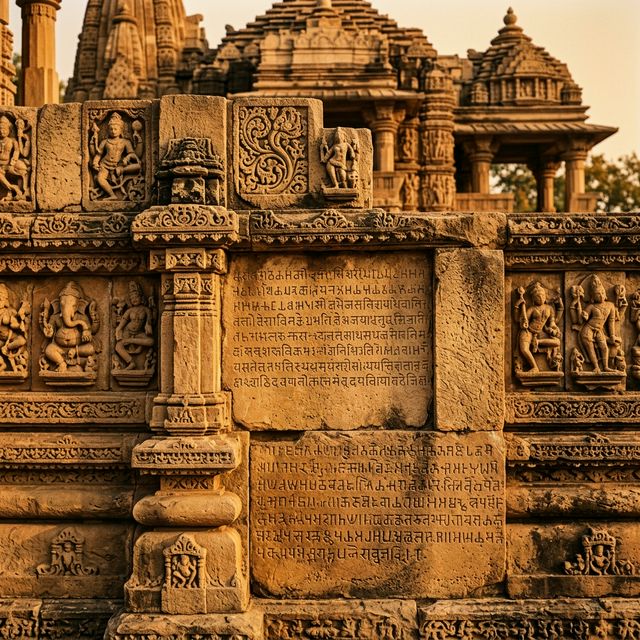
These copper plates of Trailokyamalla, discovered in 1926, at Dhureṭī (modern Dhuleti) in Madhya Pradesh. It is dated to the Kalacuri year 963, Jyēshṭha, śuddha 7 which corresponds to 9th May 1212 CE. Composed in Sanskrit language and Nāgarī script, the attached seal depicts Lakṣmī flanked by elephants with the legend Śrīmat-Trailokyamalla. The record functions as a private financial transaction rather than a royal land grant, heavily copying formal preambles from standard royal decrees.
The inscription begins with invocations to Śiva and Gaṇapati, followed by praise for Kṛṣṇa, Śūlapāṇi, and Sarasvatī. It states that during the reign of Trailokyamalladeva, the lord of Kanyakubja who meditated on Vāmadeva, a transaction was executed at Dhovahaṭṭapattana in the Dhanavahi pattalā. Nādaśiva, acting on the authority of his elder brother and Śaiva ascetic Śantaśiva, mortgaged the village Alaura to Rāṇaka Dhareka, the son of Sevarāja. The mortgage transferred all village dues, including taxes and gold. The document lists several local witnesses, including Madane and Sūpaṭa. It was written by the paṇḍitas Viśveśvara and Gaṅgādhara, and engraved by Sīruka.
First Plate
1. om namaḥ śivāya || gaṇapataye namaḥ || jayatu jayatu devo devakīnandanoyam | jayatu jayatu kṛṣṇo vṛṣṇivaṃśa pradīpaḥ | ja-
2. yatu jayatu meghaśyāmalaḥ komalāṅgo jayatu jayatu pṛthvībhāranāśī mukundaḥ || 1 || avatu sakalalokānnī-
3. lakaṇṭhaḥ smarāristri puradahanasamartho mūrdhni bhāsvacchaśāṅkaḥ | tuhinagirisutāyā vallabhaḥ śūlapāṇiḥ |
4. sakalajanaśaraṇyaḥ sarvvalokaikanāthaḥ || 2 || caturmukhamukhāmbhojavanahaṃsavadhūrmama | mānase ramatām ni-
5. tyam sarvvaśuklā sarasvatī || 3 || paramabhaṭṭāraketyādisamastarājāvalī virājamāna paramamāheśvarāśvapatigajapati-
6. narapatirājatrayādhipativividhavidyāvicāravācaspatiśrī vāmadevapādānudhyāta kānyakubjādhipatimahī–
7. pravarddhamānakalyāṇavijayarājye śrīmattrailokyamalladevarājye samvat 963 jyeṣṭha sudi 7 soma dine mahā-
8. mahatta kamantri māṇḍalikasrīmalayasimhe vyāpriyamāṇe śāndhigrahīke ṭhakkuraharipāle koṭṭapālavāhaḍa-
9. arthalekhī śrīcandasreṭhi yathāvarttamānasamastavaṇigjanavyavṛhiyamāṇam pañcakuladharmādhikaraṇa cintāyām
10. dhovahaṭṭapattane dhanavāhipattalāyām yatra kvacana śubhapradeśasamāvāsitakaṭakāt yamaniyamasvādhyāya–
11. dhyānānuṣṭhānatapacakravartti paṇḍitacakracūḍāmaṇiśaivācāryādhipatisavvavidyākuśalaḥ ka–
Second Plate
12. lau durvvāsovatāraḥ triśata rājyādhipatiśrī mattrailokyamallapādarccanarataḥ dhyānam kurvvāṇo
13. ekāgracittatayā bhaṭṭārakaśrmadrājaguruvimalaśivasutaḥ śāntaśivacaraṇāḥ vatsagotrānvaye vitta bandha-
14. svarūpatayā ṭha rāsalasutasevarājastatsutarāṇakaśrīmaddharekasya alaurāgrāmasya bhāgabhogapravaṇi–
15. karasarvvādāyasahitam yāvadhiraṇyasya dattamiti || gūruṇā manujñām prāpya yamādiguṇopetaḥ samasta-
16. prakriyānvitastri kālasnānadevārccanarataḥ agnipūjārataśca sarvvabhūtadayāparaḥ sarvveṣām vandijanā-
17. nāmādhārabhūtaḥ jantūnāmāśvā sabhūmiḥ sarvvāsu kalāsu caturaḥ || śastraśāstraviśāradaḥ bhaṭṭarakasrīma-
18. drājaguruvimalaśi vasutaḥ śāntaśivānujo nādasivana paṭṭasya varṣarūpatayā yāvadīyate tāvadavā-
19. pitamiti vittabam dhatayā kiñcitkāryakāraṇe vāraṇe vā śrīmaddharekasya yecchā sā pratidyate || atrā-
20. rthe sākṣiṇaḥ || paṭṭakila madane tathā sīle tathā ṭha sūpaṭa ṭha gāṅge vi raṇadhola vi gāṅgādeva paṭṭa vi kavita || ṭha golū-
21. ṇa iti kṛtvā praviṣye sati grahītavyam || śubham bhavatu lekhakapāṭhakrayoḥ || svalpabuddhyā mandamatiraham yat vālyāti–
22. mudgīritam suddhamasuddham vā pam visvesvareṇa likhitamiti || pam gaṅgādhareṇa ca | utakīritam sīrukena ||
Seal
śrīmattrailokyamallaḥ |
Om! Adoration to Śiva! Adoration to Gaṇapati!
Verse 1
May this god, the son of Devakī, be victorious! May this Kṛṣṇa, the great luminary of the Vṛṣṇi family, be triumphant! May this Kṛṣṇa, who has a delicate person dark like a cloud, be glorious! May Mukunda, who removes the burden of the earth, attain victory!
Verse 2
May the blue-throated Śiva, the enemy of Smara, the dear husband of Pārvatī, the daughter of the snow-mountain, and he who holds a spear in his hand, protect all people; he who was able to burn the three cities, who wears the bright moon on his head, who affords protection to all people, and is the sole lord of all worlds!
Verse 3
May the all-white Sarasvatī, the female swan sporting in the assemblage of lotuses which are the mouths of Brahmā, always enjoy herself in my mind!
Lines 5 to 14
During the reign of the illustrious Trailokyamalladeva, who looks resplendent with the complete series of royal titles commencing with paramabhaṭṭāraka; who is a devout worshipper of Maheśvara and the supreme lord of three kings (namely, the lord of horses, the lord of elephants, and the lord of men); who is the lord of speech through his study of various lores; who meditates on the feet of the illustrious Vāmadeva; who is the lord of Kānyakubja; and whose beneficial and victorious rule is augmenting on the earth:
On Monday, the 7th lunar day of the bright fortnight of the month Jyeṣṭha in the year 963, the following officials are present on duty: The mahāmahattaka, mantrin, and māṇḍalika, the illustrious Malayasimha; the sāndhivigrahika, ṭhakkura Haripāla; the koṭṭapāla, Vāhaḍa; the Arthalekhin, the illustrious śreṣṭhin (merchant banker) Canda (are also present on duty) and while the affairs in the court of justice of the pañcakula (administrative council of five people) are being managed by all merchants according to custom, at the camp fixed at an auspicious place in Dhovahaṭṭa pattana situated in the Dhanavāhi pattalā (district), the holy Śāntaśiva of the Vatsa gotra, a son of the bhaṭṭāraka, the holy Rājaguru Vimalaśiva, who has become the sovereign of ascetics through the practice of self-restraint, observances, study of sacred texts, and meditation; who is the crest-jewel of an assembly of learned people, the lord of Śaiva ācāryas, proficient in all lores, and an incarnation of Durvāsas in the Kali age; to whose feet is devoted the illustrious Trailokyamalla, the lord of three hundred kingdoms; and who is always engaged in meditation with a concentrated mind, has given, by way of mortgage, the village Alaurā, together with all dues such as bhāga (land-share), bhoga taxes on pravaṇis, and inclusive of payments in gold, to the Rāṇaka, the illustrious Dhareka, son of Sevarāja and grandson of the ṭhakkura Rāsala.
Lines 15 to 18
Having obtained the permission of his elder brother Nādaśiva, a son of the bhaṭṭāraka, the holy rājaguru Vimalaśiva, and the younger brother of Śāntaśiva, who is endowed with self-restraint and other virtues, and possessed of all marks of high rank; who is engaged in bathing three times a day, adoring the gods and worshipping the sacrificial fire; who is intent upon showing kindness to all creatures; who is the support of all suppliants and the source of consolation to all creatures; who is skilled in all arts and proficient in all arms and sciences, has conveyed by way of mortgage the whole annual income of the paṭṭa. In the matter of doing or desisting from doing anything regarding this property, the wish of the illustrious Dhareka is to be strictly followed.
Line 19
The witnesses to this deed are: paṭṭakila Madane; Sīle; ṭhakkura Sūpaṭa; ṭhakkura Gāṅge; Vi, Raṇadhola; Vi, Gāṅgādeva; paṭṭakila Vi Kavita; and ṭhakkura Golūṇa
Knowing this, the mortgagee should enter into and take legal possession of the village. May there be well-being for both the writer and the reader!
Lines 21 and 22
Whatever I, dull-witted as I am, uttered through childishness and weak-mindedness, was faithfully written down by paṇḍita Viśveśvara and paṇḍita Gaṅgādhara. This deed has been engraved by Sīruka.
Seal
The illustrious Trailokyamalla.
| Dynasty: | Candela |
| Ruler: | Trailokyamalla |
| Date: | 9th May 1212 CE (Jyēshṭha śuddha 7, varṣa 963) |
| Donor: | Śāntaśiva |
| Donee: | Rāṇaka |
| Language: | Sanskrit |
| Script: | Nāgarī |
| Religion: | Śaivism |
| Nature of grant: | Private donation, Religious endowment |
| Purpose: | To officially record the legal mortgage of the village Alaurā by a Śaiva ascetic to a local |
| Provenance of inscription: | Dhureṭī (modern Dhuleti) in Madhya Pradesh |
| Type of Inscription: | Copperplate grant |
| Source: |
Bibliography & Research
- Chakravarti, N. P. (1939). No 1. Rewah Plates of the time of the Trilokyamalladeva: [Kalachuri] Year 963. Epigraphia Indica, XXV, 1-6.
- Mirashi, V. V. (Ed.). (1955). Corpus Inscriptionum Indicarum Inscriptions of the Kalachuri Chedi Era. In (Vol. Vol 4 (Part 1), lxvii-cviii and 369-374. Archaeological Survey of India.