
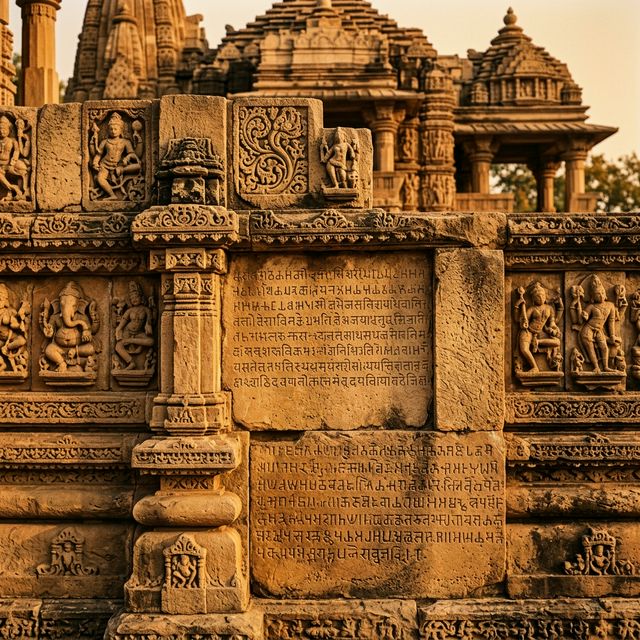
The Basim copper-plate charter, discovered in the Akola district, Maharashtra is an epigraphic record of the Vākāṭaka ruler Vindhyaśakti II. Engraved on four plates utilising the box-headed Brāhmī script, the text exhibits a bilingual composition. The genealogical preamble and closing benediction are in Sanskrit, while the formal mandate is in Mahāraṣtri Prakrit. Issued from Vātsyagulma (modern Basim), the document establishes the collateral Vākāṭaka branch descended from Sarvasena, son of Pravarasena I, tracing a distinct collateral lineage of the Vākāṭakas.
The charter documents the royal endowment of the village Ākāsapadda, located near Tākālakkhoppaka within the northern sub-division of Nāndīkaḍa. Vindhyaśakti II, directed this order to local officials. The grant was bestowed upon a collective of fourteen Atharvaveda brāhmaṇas of various gotras. The village revenue was divided into four shares, distributed unequally among the recipients. The charter enumerates agrarian and administrative immunities, exempting the settlement from police entry, salt digging, and state requisitions like grass and charcoal. Drafted by senāpati Viṣṇu, the grant is dated to the fourth day of the first fortnight of winter in the thirty-seventh regnal year.
 Editor's Comment:
First Plate
1. siddham | dṛṣṭam | vatsagulmāddharmamahārājasyāgniṣṭomāptoryyāmavājapeyajyoti-
2. ṣṭomabṛhaspatisavasādyaskracaturaśvamedhayājinassamrājo va-
3. ṣṇivṛddha sagotrasya hāritīputrasya śrīpravarasenasya pautrasya
4. dharmmamahārājasya śrīsarvasenasya putrasya dharmmamahārājasya
5. vākāṭakānām | śrīvindhyaśaktervvacanāt | nāndīkaḍasa uttaramagge
Second Plate : First Side
6. tākālakkhoppakābbhāse ākāsapaddesu amhasantakā sāvvāyogaṇi-
7. yuttā āṇatti bhaḍā sesā ya sāñcarantara kulaputtā bhāṇitavvā | āmhehim
8. dāṇi āpuṇo vijayavejayike āyubalavaddhaṇike svasti-
9. śāntivācane ihābhuttike dhāmmatthāṇe etthaṅgāme ādhivvaṇika cara-
10. ṇassa āddhaka | bhālandāyaṇasagottasim jivujjesim kapiñjala-
Second Plate : Second Side
11. sagotesim | ruddajesi | śrāviṣṭhāyaṇa sagottesi | bhāṭṭidevajjesi
12. kosikasagottesi | de-ajesi | kosikasagottesim | veṇhujjesi |
13. kosikasagottesi | vidhijjesi | paippalādisagottesi | pitu-
14. jesi bhālandāyaṇasagottesi cāndajesi kosikasagonttesi jeṭṭhaje-
15. si | paṭehi dohi bhālandāyaṇasagottesi buddhajesi kosikasagottesi |
Third Plate : First Side
16. bhāddilajjesi | kosikasagottesi | sivajjesi | kosikasagottesi
17. hariṇṇajesitti etāṇa bāmhaṇāṇa bhāgā tiṇṇā 3 kosikasagottasi
18. revatijesi | bhāgo 1 ca-utthotti ācandādiccakāliko apuvvada-
19. ttīya datto | puvvarāyāṇumate ya se cātuvejjaggāmamajjātā parihāre vita-
20. rāma | taṃ jathā araṭṭhasamvviṇayika | alavaṇakeṇṇa kkhanaka | ahiraṇṇadhāṇṇa-
Third Plate : Second Side
21. ppaṇayappadeya | apupphakkhiraggahaṇa | aparamparagobalivardda |
22. acārasiddhika | acammaṅgālika | abhaḍappāvesa akhaṭṭācollakaveṇe-
23. sika | akarada | avaha | saṇidhi | sopaṇidhi | sakutuppanta |
24. samañcamahākaraṇa | sāvvajātiparihāraparihitañca | jato uparili-
25. khita | śāsaṇavādampamāṇam karettā rakkhadha rakkhāpedha ya pariharadha
Fourth Plate
26. pariharāpedha ya | jo vu ābādham karejja katavva anumaṇṇati
27. tassa etehi | uparilikhitehim | brāhmaṇehim | parikupite sadaṇḍa-
28. nigraham karejjāmeti | sāvvaccharam 30 7 hemanta pakkham paḍhamam
29. divasa 4 samupāsatthi likhitamimam śāsanam seṇāpatiṇā
30. vaṇhuṇa iti || siddhirastu ||
Lines 1–6
Success! Seen. From Vatsagulma:
By the order of the dharmamahārāja, the illustrious Vindhyaśakti II of the Vākāṭakas, who is the son of the dharmamahārāja, the illustrious Sarvasena; who is the grandson of the dharmamahārāja, the illustrious Pravarasena I, the samrāṭa (universal monarch), who performed the Agniṣṭoma, Āptoryāma, Vājapeya, Jyotiṣṭoma, Bṛhaspatisava, Sādyaskra, and four Aśvamedha sacrifices, who belonged to the Viṣṇuvṛddha gotra, and who was a descendant of Hāritī:
The ājñāpatis and soldiers who are employed by us in all departments, as well as other touring officials of noble birth in the village of Ākāsapadda, which is situated near Tākālakkahoppaka in the northern division (mārga) of Nāndīkaḍa, should be addressed as follows:
Lines 7–18
“For the increase of our life and power, for invoking blessings and peace for ourself, and for our well-being in this world and the next, we have now granted this village, in our victorious place of religious worship, to the following members of the Ātharvaṇika caraṇa in this village as a gift not previously made, which is to be enjoyed for as long as the moon and the sun endure, in the following proportions:
Namely, three parts, (in figures) 3, of it to the following Brāhmaṇas: half a share being given to Jivujja (Jīvārya) of the Bhālandāyana gotra, to Ruddajja (Rudrārya) of the Kapiñjala gotra, to Bhaṭṭidevajja (Bhartṛdevārya) of the Śrāviṣṭhāyana gotra, to Deaja (Devārya) of the Kauśika gotra, to Veṇhujja (Viṣṇvārya) of the Kauśika gotra, to Vidhijja (Vidyārya) of the Kauśika gotra, to Pituja (Pitrārya) of the Paippalādi gotra, to Cāndaja (Candrārya) of the Bhālandāyana gotra, and to Jeṭṭhaja (Jyeṣṭhārya) of the Kauśika gotra; two shares being given to Buddhaja (Buddhārya) of the Bhālandāyana gotra, to Bhāddilajja (Bhādrilārya) of the Kauśika gotra, to Sivajja (Śivārya) of the Kauśika gotra, and to Hariṇṇaja (Hiraṇyārya) of the Kauśika gotra; and the fourth part, (in figures) 1, to Revatijja (Revatyārya) of the Kauśika gotra.
Lines 19–24
And we grant to it the following exemptions from restrictions, which are customary for a village bestowed upon Brāhmaṇas proficient in the four Vedas and are appropriate as approved by former kings: It is to be exempt from the entrance of the district police; it is exempt from the digging of salt and the fermentation of liquor; it is to be exempt from the obligation to make presents of grain and gold; it does not carry with it the State's customary right to royalties on flowers and milk, nor to customary cows and bullocks; it is exempt from the obligation to provide pasturage, hides for seats, and charcoal; it is not to be entered by regular soldiers; it is not to provide cots, water-pots, and servants to touring royal officers; it is not to pay taxes; it is not to provide draught cattle; it carries with it the right to hidden treasures and deposits, as well as major and minor taxes, platforms, and large fields; and it is to be exempted with immunities of all kinds.
Lines 24–30
Wherefore, regarding this charter as authoritative, you should protect it, cause it to be protected, exempt it, and cause it to be exempted. And whosoever causes trouble or approves of it when caused, upon him, when complained against by the aforementioned Brāhmaṇas, we will inflict punishment together with a fine.”
Lines 28–30
In the thirty-seventh, (in figures) 30 and 7, regnal year, in the first fortnight of winter, on the fourth day. This order, given by us personally, has been written by the senāpati Viṣṇu. May there be success!
| Dynasty: | Vākāṭaka |
| Ruler: | Vindhyaśakti II |
| Date: | c. 250 to 275 (First fortnight of Hemanta, Day 4, Regnal year 37) |
| Place: | Washim, Maharashtra |
| Donor: | Vindhyaśakti II |
| Donee: | Nine Atharvaveda Brāhmaṇas |
| Language: | Sanskrit and Prakrit |
| Script: | Box-headed Brāhmī |
| Religion: | Vedic |
| Nature of grant: | Land donation |
| Purpose: | To record the grant of Ākāsapadda village by the king to several Atharvaveda Brāhmaṇas |
| Provenance of inscription: | Bāsim (present Washim), Maharashtra |
| Type of Inscription: | Copperplate grant |
| Source: |
