
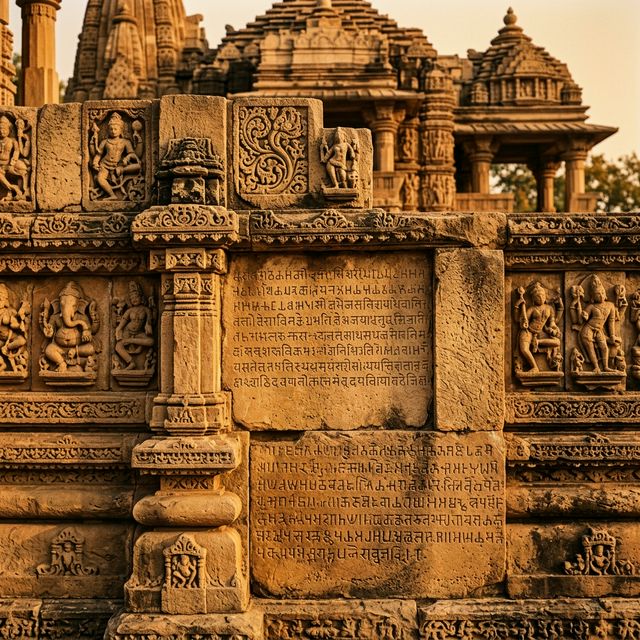
This Sanskrit inscription in Nāgarī characters is situated outside the southern door of the Gudhamandapa of the Koppeśvara temple at Khidrapur in Kolhapur district, Maharashtra. The top of the stone depicts a liṅga, a priest, a curved sword, a cow with a calf, and the sun. Issued from Devagiri, the record documents a grant by the Yādava king Siṅghaṇa. The date corresponds to April 23, 1213 CE, marked by a solar eclipse on a Monday in Caitra, Śaka 1136.
After invoking Śambhu, the text states that, the king granted the Kuḍaladāmavāḍa village, situated in the Miriñji (modern Miraj) territory at the junction of the Kuḍalakṛṣṇaveṇī and Bheṇasī rivers, to the svayambhū deity Koppeśvara. This endowment was to fund the eight-fold worship (aṅga and raṅga bhoga), offerings, and entertainments for the deity situated at the confluence of the Kṛṣṇaveṇī and Kuveṇī rivers. Siṅghaṇa additionally reinstates the previously granted revenues of the Jugula and Siriguppa villages to finance structural repairs to the temple. The document concludes with verses praising the king's martial victories.
1. śrīḥ | namastuṅgaśiraścubicandracāmaracārave | trailokya-
2. nagarāraṃbhamūlastaṃbhāya śaṃbhave || dharmaḥ susthiratāmu-
3. paitu jagatāmānandadāyī sadā vṛddhiṃ cābhinavāntareṇa
4. bhajatāṃ koppeśvarasyābhitaḥ | sthānaṃ svocitamūrjitaṃ ca
5. bahunā kālena labdhvādhunā śrīmaddhīmadudārasāracaturāyuṣmanma-
6. hāpuruṣān || bhūdevāśīramṛtātmavṛṣṭyāpyāyitoyamanavaratam
7. | aṅkuratātpallavatātkusumatu phalatātsudharmakalpataruḥ ||
8. svasti | śrīśakavarṣe 1136 śrīmukhasaṃvatsare sūryaparvaṇi somadi-
9. ne śrīmaddevagirāvadhiṣṭhitaḥ samastabhuvanāśrayaḥ śrīpṛthvīvallabho mahārājā-
10. dhirājaḥ parameśvaro dvāravatīpuravarādhīśvaro viṣṇuvaṃśodbhavo
11. yādavakulakalikāvikāsabhāskaraḥ samasta-astāri-
12. rāyajagajjhaṃpa ityevamādisamastarājāvalīsamalaṅkṛtaḥ śrīma-
13. tpratāpacakravartiśrīmahārājaśrīsiṅghaṇadevaḥ śāsanapatraṃ praya-
14. cchati | yathā | kūḍalakṛṣṇaveṇībheṇasīnadyoḥ saṅgame miriñjideśa-
15. madhye ca tiṣṭhantaṃ kūḍaladāmavāḍagrāmaṃ savṛkṣamālākulaṃ kṣetrastha-
16. lavāṭasahitaṃ navanidhānasaṃyuktaṃ caturāghāṭopetaṃ svasīmāparyantaṃ
17. śrīmatkṛṣṇaveṇīkuveṇīnadīsaṅgame śrīmadādyasvayaṃbhuve
18. śrīkoppeśvaradevāya sakalāṅgabhogaraṃgabhogaparimalaparipū-
19. raṇārthaṃ aṣṭavidhārcananimittaṃ śāsanodakena pradattavān || asya
20. grāmasyotpannadravyeṇa sakalasthānapatibhiḥ śrīmaddevakā-
21. ryaṃ sarvamapi aṅgabhogapūjādiprabhṛtikaṃ karaṇīyam |
22. anyacca jugulasiriguppagrāmadvaye yatpūrveṇa vidyate tadeva jīrṇo-
23. ddhārārtha śrīsiṅghaṇadevaḥ śrīkoppeśvaradevāya pradattavān ||
24. ānandāmṛtasāgarasya bharaṇe yaḥ pūrṇacandrāyate yaḥ kārpa-
25. ṇyatamastateśca haraṇe mārtaḍatāṃ ḍhaukate | yaścāyaṃ hṛdaye nive-
26. śitahariḥ kṣīrābdhinā spardhate tasya śrībhujavallarī vijayate siṃhā-
27. hvapṛthvīpateḥ || ripubhūmipālabhālasthalanihitaṃ kṣālayanraṇeṣu cakāsti |
28. gajagalagalitamadāṃbupravāhatosau jayati sihanṛpaḥ || maṅgalam ||
May there be prosperity!
Verse 1
Obeisance to Śambhu!—who is the foundation pillar commemorating the commencement of the creation of the three worlds, and looking beautiful with the chowry that is the moon lightly resting on its high top which is the lofty head of Śambhu.
Verse 2
May religion attain great stability and augmentation in the region round the temple of Koppeśvara, delighting the three worlds at all times in the new circumstances as it (i.e. the religion) has now, after a long time, obtained a high abode worthy of it and also great men (viz. the Yādavas) who are prosperous, intelligent, powerful, clever and long-lived!
Verse 3
May the wish-fulfilling tree in the form of true religion, which is unceasingly nourished by the showers in the form of the blessings of the Brāhmaṇas, sprout, send forth tender shoots, put forth blossoms and ultimately bear fruits!
Line 8-23
Hail! In the prosperous Śaka year 1136, on Monday, on the holy occasion of a solar eclipse in the month of Caitra in the cyclic year Śrīmukha,—the illustrious pratāpacakravartī, mahārāja Siṅghaṇadeva, who is adorned with all royal titles such as ‘the asylum of the whole world,’ ‘the illustrious Lord of the Earth,’ mahārājādhirāja, parameśvara, ‘the Lord of the excellent city of Dvāravatī,’ ‘a scion of the race sprung from Viṣṇu,’ ‘the Sun that has made the bud of the Yādava family bloom,’ ‘he who is victorious over all hostile kings’ and so forth—while residing at the prosperous Devagiri—grants the following royal charter—
He has granted, with the pouring out of water while bestowing a charter, the village of Kuḍaladāmavāḍa comprised in the Miriñji-deśa and situated at the confluence of the rivers Kuḍalakṛṣṇaveṇī and Bheṇasī, together with its cluster of trees, together with its fields, other places and gardens, together with its nine treasures, extending to its limits, with its four boundaries well determined, to the primeval self-existent holy God Koppeśvara, installed at the confluence of the famous rivers Kṛṣṇaveṇī and Kuveṇī, in order to provide for his eight-fold worship inclusive of all offerings, entertainments and perfume. With the revenue of this village all the chiefs of the village should perform all rites of the god, inclusive of his worship, offerings and so forth.
Moreover, the illustrious Siṅghaṇadeva has redonated to the holy God Koppeśvara what had previously been given in the villages Jugula and Siriguppa, for the purpose of the repairs of the temple.
Verse 4
Victorious is the beautiful creeper-like arm of the Lord of the Earth named Siṃha (i.e. Siṅghaṇa), who acts like the full moon in causing the overflowing of the ocean of nectar-like joy, who is the Sun in dispelling the mass of darkness in the form of indigence, and who vies with the milk-ocean in having Viṣṇu dwelling in his heart.
Verse 5
Victorious is that King Siṃha (i.e. Siṅghaṇa), who washes away with the streams of rut flowing from the temples of his elephants what was written on the foreheads of hostile kings in the battles fought with them.
May there be happiness!
| Dynasty: | Yādava |
| Ruler: | Siṅghaṇa |
| Date: | 23rd April 1213 CE (śaka 1136) |
| Place: | Koppeshvara temple, Khidrapur |
| Language: | Sanskrit |
| Deities: | Koppeśvara |
| Nature of grant: | Religious endowment |
| Purpose: | For the maintenance & worship of liṅga |
| Provenance of inscription: | Khidrapur, Kolhapur |
| Type of Inscription: | Stone inscription |
| Source: |
Bibliography & Research
A. S. Altekar (1960). Ghulam Yazdani (ed.). The Early History of the Deccan Parts. Vol. VIII: Yādavas of Seuṇadeśa. Oxford University Press.
T. V. Mahalingam (1957). "The Seunas of Devagiri". In R. S. Sharma (ed.). A Comprehensive history of India: A.D. 985-1206. Vol. 4 (Part 1). Indian History Congress / People's Publishing House.